In our article Cloud Manufacturing: The Future of Industry 4.0, we touched upon the foundations of Industry 4.0, the three major industrial revolutions, and some of the most potent areas of Industry 4.0 as seen through the Cloud Manufacturing lens.
There is still much ground to cover before we make our businesses ready to move on to a more sustainable and socially aware Industry 5.0 (yes, it’s already 5.0 when it’s still not 4.0, treat it as an example of quantum progress in action).
And - to showcase where we currently are - let us take a look at live examples of how Fortune 500 companies progress to achieve more autonomous systems by integrating AI and machine learning into production processes - all within the Cloud Manufacturing context.
This article yet again draws insights from Gartner, Forrester, and BCG, as they are in the know.
Cloud Manufacturing allows seamless integration of AI and machine learning into production processes, enabling automated decision-making and process optimization. Sounds very lackluster, but as stated by Gartner, AI-driven automation can lead to a 30% increase in efficiency by reducing manual errors and optimizing resource use, and that’s big!
Let’s see how it plays out in the automotive industry.

The BMW Group has been working to move one level higher in vehicle production with its in-house Artificial Intelligence technologies, such as Car2X and AIQX, under the BMW iFACTORY initiative.
These AI innovations are transforming BMW vehicles into intelligent, communicative participants in their own production, enabling faster, more reliable, and efficient manufacturing processes. Car2X allows vehicles to communicate and interact in real-time with the production system, identifying and reporting assembly errors, while AIQX uses sensors and cameras for visual and acoustic quality inspections, automating and optimizing quality control. Together, these technologies enhance the production process by reducing rework, improving quality, and ensuring precise assembly.
Hard not to dig the great and simple ideas of real-time feedback loops when you manufacture something more complicated than a Baum brick, right?
More so, the BMW Group’s commitment to advancing AI technology is integral to its production strategy, encapsulated in the BMW iFACTORY's pillars of LEAN, GREEN, and DIGITAL.
Through continuous innovation and development in AI, BMW is not only optimizing its current production processes but also making waves in the industry.
As stated by the Group, the company actively trains its employees and expands its AI capabilities to support this transformation, ensuring that every BMW model benefits from the highest standards of quality and efficiency. Needless to say, it would not be possible without opening up to the cloud years back. Overall, a great example of Cloud Manufacturing approach in practice.
As stated by Forrester, self-optimizing systems open new possibilities within predictive analytics to foresee potential issues and adjust operations. Yes, it’s for you, plant manager, as when played out well, continuous monitoring of equipment and processes will finally allow you to anticipate problems & act before they pop up. Thus major maintenance costs - as much as 20%. Plus, unplanned downtimes are no longer an issue.
Example: ABB
The approach to predictive maintenance at ABB combines machine learning with model-based analytics, offering a more effective method than relying solely on data science. By comparing actual performance with the expected performance across different plants and fleets, this approach not only predicts the likelihood of equipment failure but also estimates the time to failure.
This enables a deeper analysis to identify root causes and develop targeted action plans to prevent faults before they happen. ABB's methodology emphasizes early detection and intervention, optimizing maintenance strategies and reducing the risk of unexpected equipment failures.
One of the main pillars of Cloud Manufacturing, realized. And what’s the tech behind it?
ABB Ability™ Genix APM is the company’s framework that exemplifies such a combined approach, utilizing well-developed models alongside predictive analytics to monitor asset health and detect potential issues well in advance.
The system uses data from healthy plant states to configure statistical models, which are then enhanced with heuristic knowledge, particularly in the form of Failure Mode and Effects Analysis (FMEA). Real-time signals from various sources are continuously checked against these models, providing operators with diagnostic indicators, fault indicators, and performance metrics through the UI layer.
This comprehensive analysis allows for predictive maintenance strategies that can be applied across multiple sectors, ensuring optimal equipment reliability and efficiency. Big thing from a big company.
Cloud Manufacturing supports adaptive manufacturing, where production processes can be quickly reconfigured to meet changing demands. And even if it changes as huge as airline solutions providers pivoting to new products and recalibrating their lines entirely in COVID times are still not covered, BCG notes that adaptive manufacturing enabled by cloud technologies can substantially reduce time-to-market for new products and improve responsiveness to market changes.
Toyota Case
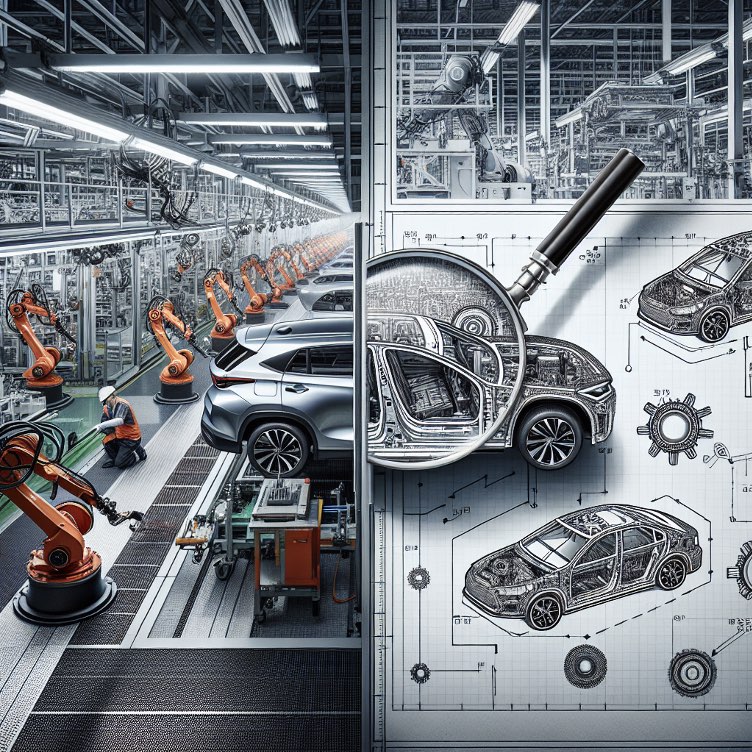
Toyota, being a trailblazer in manufacturing on many fronts, has managed to seamlessly integrate digital transformation into its manufacturing processes, demonstrating a relentless commitment to quality and innovation.
Central to this transformation is Toyota's well-defined digital strategy, which emphasizes understanding customer needs, leveraging data analytics, and implementing agile manufacturing systems. The company’s thoughtful adoption of technologies such as the Internet of Things (IoT), big data, and advanced analytics allows for real-time monitoring, predictive maintenance, and enhanced quality control. Combined with the simple and clean implementation patterns inherent to the Japanese, it strongly enhances the company’s manufacturing capabilities.
On top of that, Toyota mastered artificial intelligence (AI), augmented reality (AR), and virtual reality (VR) to further support their production processes and train employees.
The shift to cloud computing facilitated all those changes. Plus, it allowed tapping deeper into the collaborative aspect by introducing collaborative robots, or 'cobots,' alongside digital twin technology.
All things considered, Toyota's commitment to innovation, enabling virtual testing and continuous improvement, makes them one of the most adaptive manufacturers in the world.
One step further from the above cases lie fully autonomous systems. Rhetorical questions aside, to prepare for it manufacturers in the first place must build a robust digital foundation. This involves investing, just like Toyota, in cloud-based infrastructure, IoT devices, and advanced analytics. Gartner predicts that by 2027, a significant portion of manufacturing systems will be finally cloud-based, providing the necessary infrastructure for autonomous operations.
General Motors Case
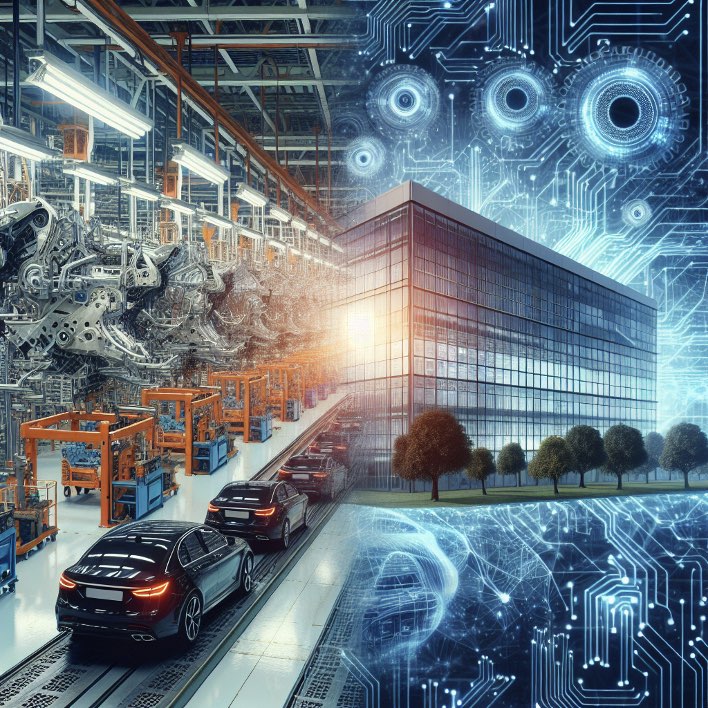
Since the partnership between General Motors and Microsoft, the company has managed to leverage the power of cloud computing to the next level. By integrating Microsoft’s Azure cloud platform, GM and its subsidiary Cruise enhanced the safety and efficiency of self-driving cars through large-scale data processing and real-time analytics. This collaboration enables the immediate analysis of vast data collected by vehicles, allowing for rapid responses to traffic and road conditions. Additionally, GM plans to utilize these cloud services to drive digital transformation across its operations, optimizing the digital supply chain, improving employee productivity, and ultimately bringing 30 new electric vehicles to market by 2035 with the ambitious goal of achieving zero crashes, zero emissions, and zero congestion.
This partnership goes beyond mere technical collaboration; it represents a strategic alliance between industries. Aimed at fostering business growth and innovation while contributing to a safer, cleaner, and more accessible mode of transportation. A harbinger of Industry 5.0?
The currently utopian future of manufacturing seems to lie in fully autonomous factories, where AI-driven systems manage all aspects of production.
None of the biggest technological research and consulting firms envision that scenario unraveling in its full potential globally, but one thing is certain: cloud technologies already do & will further enable manufacturers to operate with minimal human intervention, optimizing efficiency and productivity.
In that regard, Cloud Manufacturing is crucial for future-proofing factories. By integrating AI and machine learning, developing self-optimizing systems, enhancing production flexibility, and building a solid digital foundation, no factory will come unequipped to the future’s table.
Need to upskill your Cloud Manufacturing game?
Drop us a line at contact@insightify.io & we’ll be back right after.